Most couples aren’t fighting about what they think they’re fighting about.
We go beneath the surface — to the patterns, cycles, and attachment needs driving the conflict. For all relationships, without qualification.

You don’t need to be on the brink to start.
- “We have the same fight about different things.”
- “We feel more like roommates than partners.”
- “One of us pushes. The other shuts down.”
- “We’re not sure whether to stay or go.”

Relationships get stuck in cycles.
The fight might be about money, sex, or dishes. Underneath, it’s usually about feeling unseen, unsafe, or unable to reach each other.
- 1One partner feels distant and reaches harder.
- 2The other feels criticized and pulls back.
- 3The distance grows — and it repeats.
The cycle is the problem — not either of you.
Whatever is happening between you, we’ve worked with it.
- Communication & conflictArguments that never resolve, shutting down, contempt.
- Emotional distanceFeeling like roommates, or losing the intimacy you had.
- Intimacy & desireDesire discrepancy, different needs, shame, avoidance.
- Trust & betrayalInfidelity, broken agreements — and whether repair is possible.
- Life transitionsNew parenthood, loss, career upheaval, relocation.
- PremaritalValues, conflict styles, and what you each need.
- Non-monogamyOpening up, ENM, and polyamorous agreements.
- DiscernmentDeciding whether to stay or go — without pressure.

Attachment-informed, grounded in your actual relationship.
Emotionally Focused Therapy
A well-researched approach that maps your negative cycle, the attachment needs beneath it, and builds new ways of reaching each other.
Psychodynamic work
Each partner brings their history. Understanding it helps you both stop replaying patterns that don’t serve you.
Sex-positive therapy
Desire, intimacy, identity, and shame — approached without judgment and with real clinical knowledge.
Affirming — without you having to prove it.
You shouldn’t have to educate your therapist about your relationship, identities, or community.
- LGBTQIA+ couplesSame-sex, queer, trans, and non-binary.
- Ethically non-monogamousPolyamorous and open relationships.
- Kink-aware & affirmingNo pathologizing or shaming.
- Intercultural & interracialDifferent backgrounds and family expectations.
- Neurodiverse couplesADHD, autistic traits, and more.
- Traditional partnershipsEqually welcome, whatever your structure.

Valarie Merced, LMHC — sex therapist, sexologist, and senior psychotherapist
Couples therapy intensives.
Concentrated sessions that can accomplish in a weekend what weekly therapy might take months to reach. Led by Valarie Merced.
- Half-dayThree to four hours on one issue.
- Full-dayDeeper work at a crossroads.
- Multi-daySustained progress over several days.
Calm rooms for hard conversations.


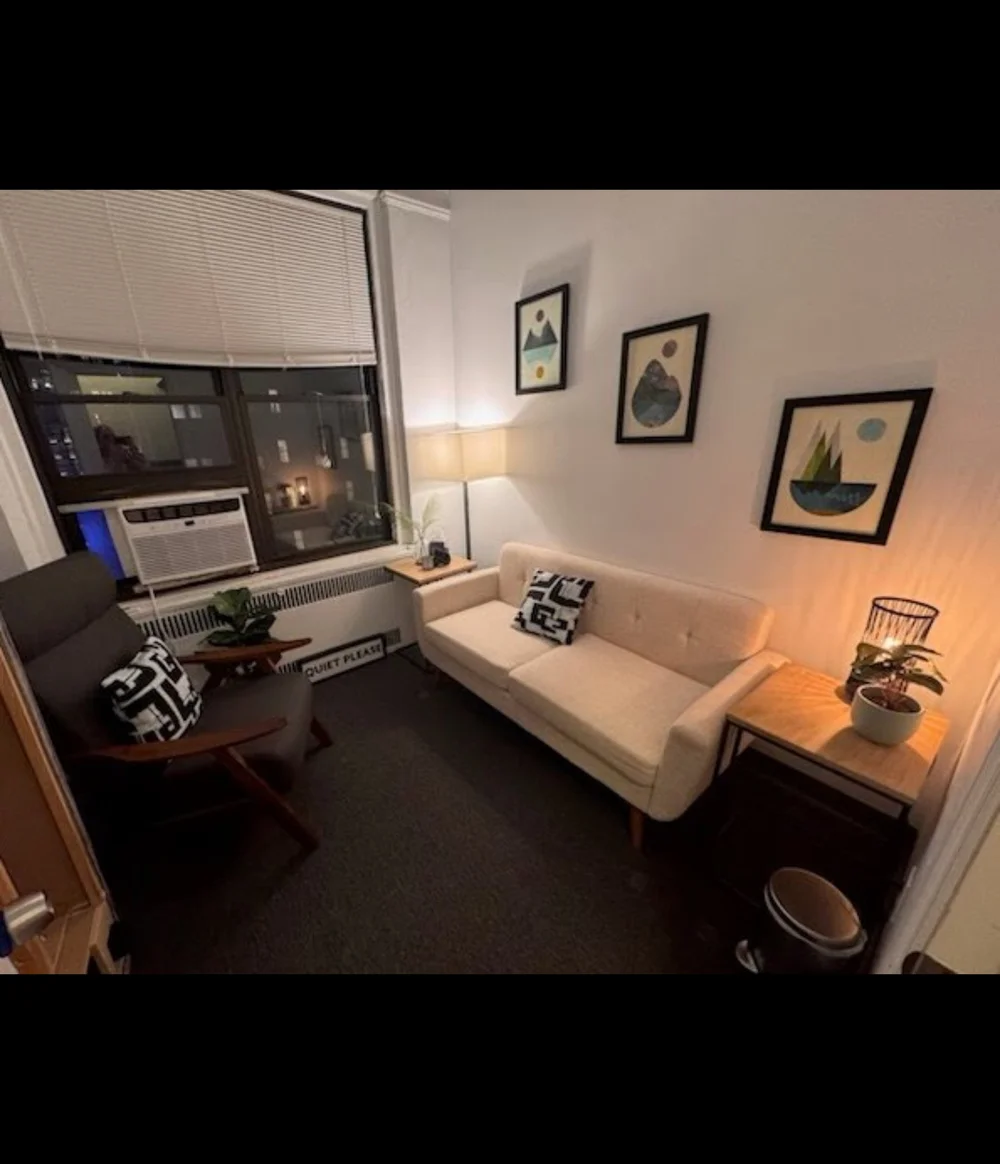
Prefer video? Telehealth is available in New York, Massachusetts, and Oregon.
What to expect.
Reach out
A brief message is enough. We reply within 24 to 48 business hours.
We match you
With a therapist whose training and availability fit — and who knows your relationship structure.
Free 15-minute call
Together or separately. No obligation.
You begin
Usually 50 to 60 minutes, weekly. The timeline is your own.
What couples ask first.
Do we need to be in crisis to start?
No. Many couples come wanting more connection and less distance — not because things are falling apart.
What if we’re not sure we want to stay together?
Discernment therapy helps partners make a clear, thoughtful decision — without pressure in either direction.
Is our relationship structure welcome?
Yes — LGBTQIA+, ENM and polyamorous, kink-aware, intercultural, neurodiverse, and traditional partnerships.
Can we meet by video?
Yes. Telehealth is available in New York, Massachusetts, and Oregon.
Do you take insurance?
See fees and insurance for current rates and coverage.
Ready to find your way back to each other?
Tell us a little about what’s going on. We’ll match you carefully — no pressure, no commitment.
Looking for individual therapy? See therapy for clients.