The Art of Listening
Deeply
Slowing Down the Work and Connecting with Your Patients
The real art of therapy is not
in what you say — it's in how you listen
For clinicians, the most challenging moments in a session are the ones where we don't know exactly what to say. We feel an urgent need to know what's happening, to fill the void, or to prove our competence by offering a clever insight. We often worry that if we don't speak or say the right thing, we are failing the patient.
This seminar is built on the belief that the real art of therapy is not in what you say, but in your capacity to deeply listen to what is not yet able to be said. Patients may not know why they get in their own way — in fact, they usually don't. The material that drives their struggle may be outside of their own awareness, and therefore outside of the spoken language used in session.
The course moves through five essential areas of clinical listening: the foundational structure (the frame), non-verbal data, defensive operations, the patient's language, and the therapist's emotional response. It teaches you to overcome your own anxiety and create a safe container where everything can be brought to light.
Five content parts plus a final wrap and review session
Open to pre-licensed clinicians at BIPS or any other team member
LCSW · Supervisor & Psychotherapist at BIPS
What no one teaches you
in graduate school — and why psychoanalytic listening changes everything
Graduate training equips clinicians with theory and technique — but the hardest skill to develop is knowing how to be present with what you don't know, without rushing to fill it. Novice clinicians in particular tend to manage their own anxiety by speaking when they should be listening, interpreting when they should be receiving, and reaching for insight when the patient is asking to be held.
This seminar gives you a structured, clinical framework for that skill — teaching you to read the body, the silences, the defenses, the word choices, and your own emotional responses as data. By the end, you will have a fundamentally different relationship with not-knowing in the room.
For clinicians in New York City who are drawn to psychoanalytic and psychodynamic training but aren't yet ready to commit to a full psychoanalytic institute program, this seminar offers an accessible, practice-grounded entry point. It covers the foundational listening skills that psychoanalytic theory centers — unconscious communication, transference, countertransference, and the therapeutic frame — in a format designed specifically for working clinicians.
17 weeks, five areas of listening
More than a job — a place to actually become a clinician
Intensive individual and group supervision from doctoral-level and licensed supervisors — targeted to your specialty and caseload, not generic check-ins.
Seminars like this one — built by clinicians, for clinicians — covering the techniques and concepts that matter most for real clinical work. Not just continuing education boxes to check.
BIPS actively supports clinicians toward their niche — helping you go deeper in your specialty, not just filling a slot on a roster. Your growth is part of how we think about the practice.
A clinical culture grounded in depth, curiosity, and relational thinking — rare in private practice settings, and central to who we are. If you're drawn to psychoanalytic ideas, you'll feel at home here.
We offer the most competitive compensation and benefits package of any NYC-based private group practice — because we believe the people doing this work deserve to be taken care of too.
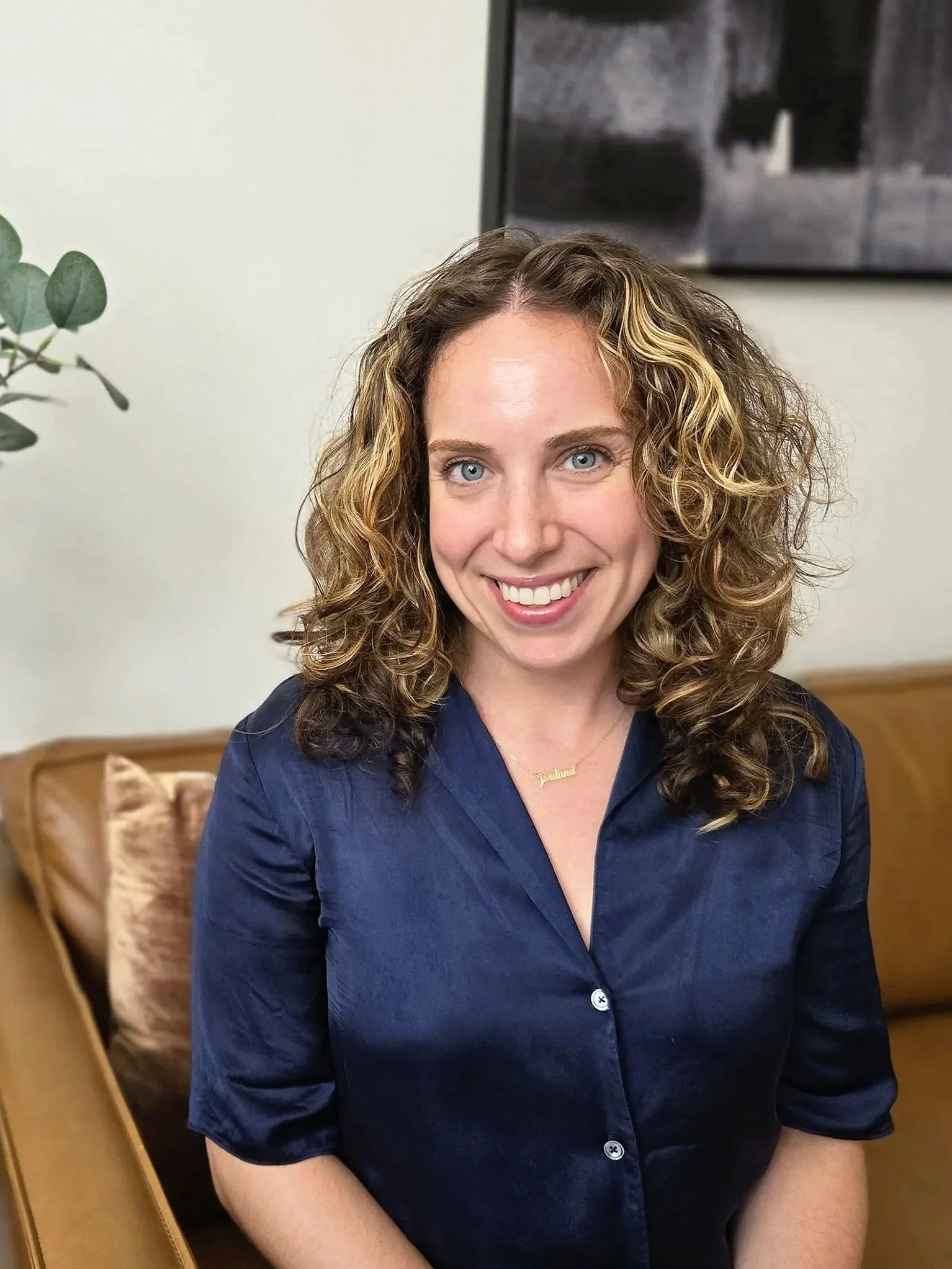
Jordana Alhante
LCSW · Supervisor & Psychotherapist · Brooklyn Integrative Psychological Services
Jordana is a licensed clinical social worker, clinical supervisor, and full-time therapist at BIPS — currently in psychoanalytic training. She takes a psychodynamic and relational approach grounded in the belief that therapy works best not by offering quick fixes, but by creating space to slow down together and get curious about what's underneath the surface: the patterns, the pain, the hopes, and the parts of a person that may have been left behind along the way.
She draws on both psychodynamic and cognitive behavioral theory to get past stuck points, working through a lens of unconditional positive regard that allows her to form genuinely distinct therapeutic alliances with each client. Her specialties include OCD, anxiety, grief, heartbreak, codependency, divorce, relationship dynamics, and life transitions.
Jordana earned her MSW from the Silberman School of Social Work at Hunter College and trained at Ellis Psychology and the Hunter College Counseling and Wellness Center before joining BIPS, where she now also supervises clinicians as part of the team's ongoing education program.
She describes her clinical style as attentive, honest, and unafraid of complexity. As a supervisor and now instructor, she brings that same quality into the training room — holding space for the anxiety of not-knowing while helping newer clinicians develop their own capacity to listen deeply and sit with what hasn't yet been spoken.
Read Jordana's full bio →Train here.
Grow here.
This seminar is one part of a rich clinical education program built for early-career therapists at BIPS — weekly supervision, ongoing clinical education, and a team that takes your development seriously. If this is the kind of place you want to train, we'd love to hear from you.